


features
Facebook Marketing: Marketers have got it wrong. So what?
03 Oct 2012
2 Comments
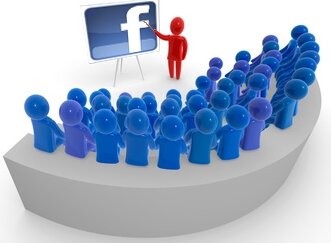 Social Media marketing and Facebook Marketing are the hottest phrases among marketing community globally. In the countries with high Facebook penetration such as India (close to 70% Internet users use Facebook), marketers are literally falling over one another to reach out to “fans” on Facebook. The lower cost of this experimentation has just added to the mad rush.
And what have they achieved? Nine million fans is the “achievement” of the top brand in India on Facebook, that happens to be Tata DoCoMo. Kingfisher, Nokia, Fastrack, Vodafone—all these brands have somewhere between 4 to 5 million fans. As of now, that is the achievement.
Do these fans mean anything? Do they really turn up after that one click? If they do, do you get anything tangible? And how does it matter to you if they say good things about a Bollywood film that stars an actor who also happens to be your brand ambassador? Do you get anything out of that?
These questions and discussions are as common in the marketing circles as the excitement about Facebook marketing.
So, have they got it all wrong? Seems like.
Have they lost it?
Definitely No.
Let’s not forget that as a marketing medium, we are talking about something that is not even three years old. We have not yet seen anything.
All through, any new technology/medium has always replicated what the established technology/medium had been doing, while improving it in one dimension, in one significant way. It has always taken people time to realize the complete potential of new medium. Cinema, Television, Computer, Internet—there has been no exception to this rule. When cinema came, it potentially removed the obstacles of time and space completely. But for long, that was used in relation to the audience and not in relation to the actual production. For some time, film makers used to enact plays, record it and show it to audience at different places. That was a great advancement, as the audience did not have the constraint of time and space. But cinema as a medium could do much more. It took some time before its full potential was realized. Same happened with computers.
The same is happening with Facebook and social media. The one tangible change— measurability—is so big an advancement that marketers are still coming to terms with it, embracing it, using it with some innovations and celebrating it. And while doing so, they are still using the parameters of the older media—absolute numbers, CPM and so on. The fully interactive nature of the medium has not been exploited except to get likes and a few comments.
One will be foolish to believe that they do not realize it. But the pressure of acting and showing some result—never mind what is the real impact of that—is so intense that few have got time for the slower but potentially more rewarding path.
And like it has happened in the past, partly because of maturity, partly because of disillusionment with the current ways, and partly because of technology advancement, they will surely turn to exploit the new capabilities.
And then, we will see the real impact of Facebook marketing. Here is a possible evolution path.
Better customer engagement: Many brands are already doing it. They are going beyond number of likes and fans/followers to actually improve customer service/brand loyalty and some are even doing some up-selling. This will become the norm soon and will mature even as it sees more interesting innovations and experimentation.
Customization of marketing: For many businesses, target marketing (remember Segment of One?) is not new. No medium provides better capability than social media to do that, in a manner that could still be seen as non-intrusive. Some experiment is happening but one is afraid to see too many Indian brands doing that. For some businesses like online retail, they could actually close the business if they do it well. One believes this will happen sooner rather than later.
Customization of product: It is the logical next stop, though it cannot be applied in all businesses. In many areas, products can actually be customized to cater to the needs of a set of customers, based on the real time feedback from social media. Those who do it well will surely have an upper hand. It can be done in many industries such as telecom, entertainment, fashion.
Co-creation: The ultimate step on this path is actually co-creating products with your customers. The idea has been there for long. In B2B products, it is a reality. In B2C too, it has been tried but social media can actually make it faster and far more effectively.
Naturally, there are some businesses for which social media is far more effective. Those are typically B2C businesses with a lot of engagement/customization possibilities. Some of the industries that one can think of are: media, entertainment & films, events, fashion, online retail, travel & hospitality, books and music.
But most consumer businesses will figure out their best usage proposition.


Latest Features

Most Popular
1
14 Jun 2016
2
15 Jun 2016
3
20 Jun 2016
4
22 Jun 2016
5
17 Jun 2016
Comments
18 Nov 2012
I am actually neither involve in Social Media Marketing nor do know so much strategies about Facebook marketing policy. Well, I do have basic knowledge about SEO. As I have seen so many facebook fan pages in the rank of google search result. So isn't it happens due to likes, comments and share on Facebook. I am sure that Facebook marketing strategies will be the option in future.
05 Oct 2012
Great read! The 9 mn likes is such a sham without proportionate impact on market - measurability as a blunt instrument in a new medium results in such illusory "achievements" but a lot of the blame is at the door of marketers and agencies who cannot think beyond the cost per click mentality without any sense on the brand's long term value
- Most Commented
- Recent Comments
Latest Jobs

Most Read Interviews
